
My Philosophy
 Cross
CrossTalk
ダイバーシティ推進センター
副センター長
研究所 副所長
Cross Talk .01 | Toward a future where women can fully realize their potential in healthcare and research
Creating an Environment Where Women Can Sustain Their Careers and Thrive as Leaders in Healthcare and Research.
We spoke with two female leaders on advancing diversity:
Dr. Eri Hirasawa, Vice Director of the Diversity Promotion Center at Juntendo University, which is a pioneer in the “Initiative for Realizing a Diverse Research Environment (Women Leader Development Program)” of the Ministry of Education, Culture, Sports, Science and Technology, and Dr. Maki Fukami, Deputy Director of the Research Institute at the National Center for Child Health and Development (hereafter, NCCHD), which was newly selected for the same initiative.
ダイバーシティ推進センター
副センター長
研究所 副所長
Creating an Environment Where Women Can Sustain Their Careers and Thrive as Leaders in Healthcare and Research.
We spoke with two female leaders on advancing diversity:
Dr. Eri Hirasawa, Vice Director of the Diversity Promotion Center at Juntendo University, which is a pioneer in the “Initiative for Realizing a Diverse Research Environment (Women Leader Development Program)” of the Ministry of Education, Culture, Sports, Science and Technology, and Dr. Maki Fukami, Deputy Director of the Research Institute at the National Center for Child Health and Development (hereafter, NCCHD), which was newly selected for the same initiative.
A support system that made “If only I had 10 more minutes…” a reality
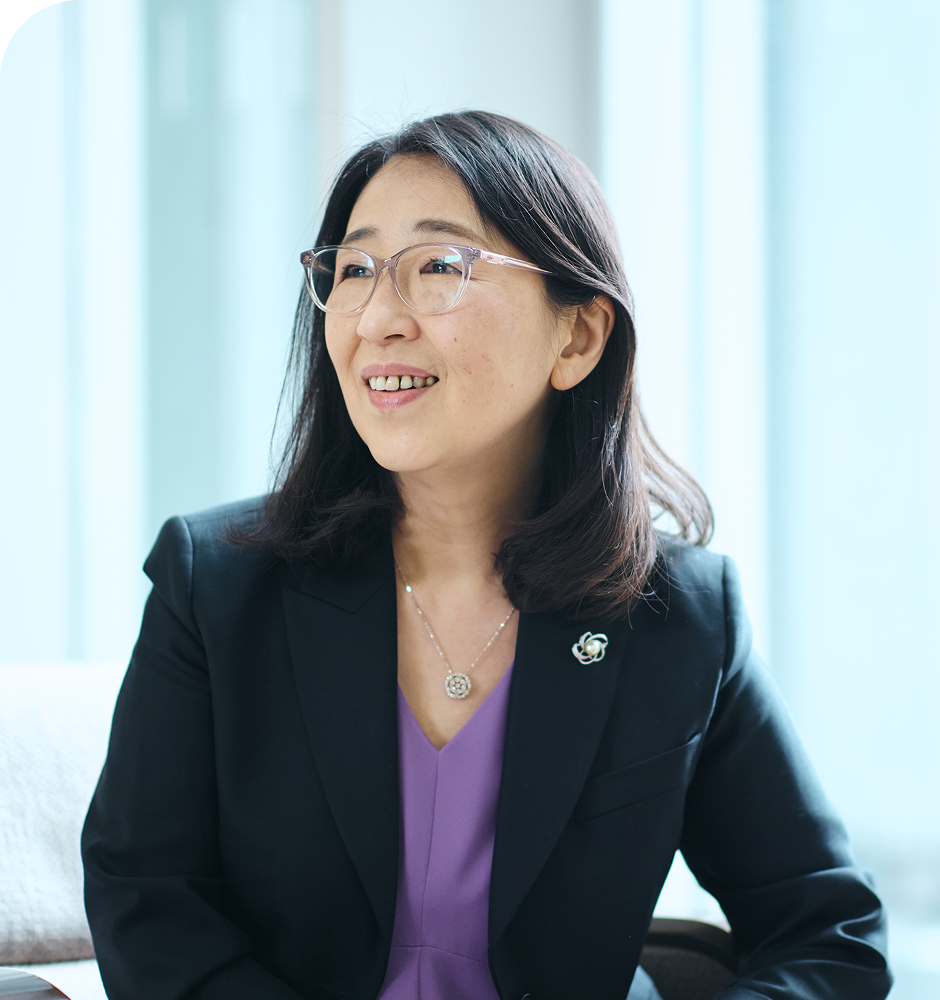
Dr. Hirasawa
The first initiative we introduced was a “research support program” designed to alleviate the time constraints during life events. Through this program, researchers can receive approximately five to six hours of research assistance per week.
For example, even when a study is just one step away from yielding results, researchers may be forced to abandon experiments due to childcare responsibilities. Situations like “If only I had 10 more minutes, I could finish this experiment” are surprisingly common, and even small time shortages can hinder the continuation of research.
By providing short-term, targeted support, we help researchers balance research challenges with family life. When determining the type of support, we take sufficient time to interview each researcher individually and carefully match them with appropriate assistants. Approximately 20 researchers use this program each year.
Dr. Fukami
That is a very effective support.
We have just started our own “research assistant system,” which allows flexible work-time arrangements ranging from one to five days per week depending on the needs of each researcher.
Dr. Hirasawa
That’s wonderful to hear.
Next, we introduced a “special appointment faculty system” to support the career advancement of women researchers. This program aims to place women in senior positions across clinical departments by hiring them as specially appointed associate professors on five-year terms and supporting their transition to tenured associate professor positions.
Originally, the plan was to appoint two or three individuals, but the Dean of the Medical School (Current University President) suggested increasing the number to ten. As a result, female associate professors were appointed in departments with traditionally few women, such as neurosurgery and cardiovascular surgery. This was a major catalyst for organizational change.
Currently, we are also focusing on “global leader development” in collaboration with the Institute of Science Tokyo. This initiative supports overseas collaborative research and international conference presentations, enabling women researchers to broaden their global perspectives and professional networks. In particular, we support international joint research for candidates for professorships, and are currently promoting collaborations with the University of Toronto, McGill University, and the Mayo Clinic.

Keys to Advancing Diversity
Dr. Fukami
What would you say was the single most important key factor in advancing diversity initiatives at Juntendo University?
Dr. Hirasawa
The most important point was not treating this as “a women’s issue.”
If diversity initiatives are framed narrowly as “women supporting women,” they are difficult to sustain.
One of the main reasons we were able to make significant progress was appointing the President (now Executive Advisor to the Chairman) as Director of the Center for Diversity and Inclusion. I serve as Deputy Director, supporting the Center’s activities.
By clearly positioning diversity as an issue for the entire organization at the leadership level, it became a core institutional strategy rather than an initiative driven by only a small group of women. This led to tangible and far-reaching results.
Dr. Fukami
So rather than simple “support for women,” advancing diversity initiatives should be positioned as organizational reform.
We, too, need to work on changing awareness across the entire organization.
Dr. Hirasawa
“Unconscious bias” is another major barrier.
For example, when someone hears, “I need to leave early today because my child has a fever,” many people instinctively assume the message is coming from a woman.
These kinds of assumptions influence decision-making in many ways, often without people even realizing it.
Dr. Fukami
Did you implement any specific measures to address these issues and embed diversity efforts as an organization-wide initiative?
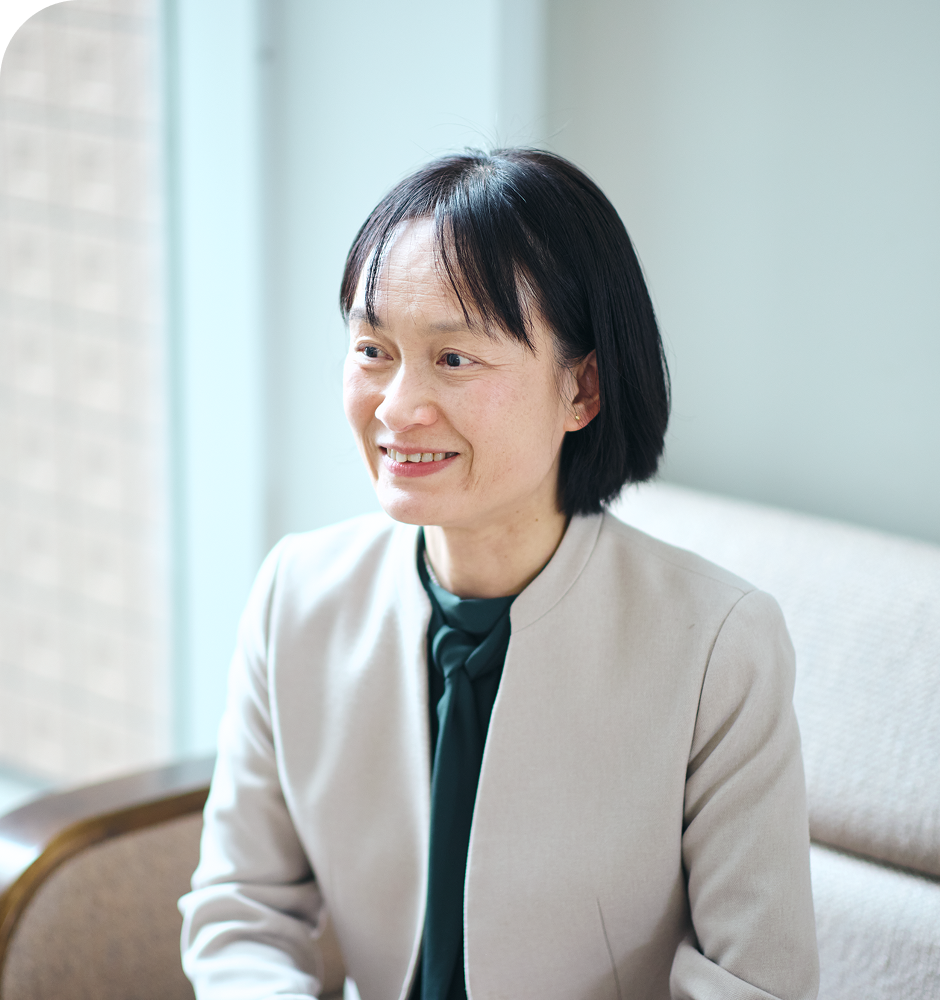
Dr. Hirasawa
Building networks among women proved extremely effective.
The ten Specially Appointed Associate Professors held online meetings every two weeks under the theme “Work Style Reform Mission,” where they shared innovations and successful practices within their respective departments.
In addition, interviews between these women associate professors and the heads of their departments were published on our website, making the organization’s efforts more visible.
This produced results beyond our expectations: it allowed senior professors to reassess the abilities and potential of their team members, while also boosting the confidence of younger women researchers.
Researchers who grow go on to mentor the next generation, who in turn nurture those that follow. This virtuous cycle is helping to build a self-sustaining ecosystem for human resource development.
Importantly, this ecosystem supports not only women researchers but also the career development of young researchers. The key principle is ensuring that no one is left isolated.
Dr. Fukami
We also believe that mentoring systems are essential for supporting researchers’ careers.
By utilizing the Distinguished Researcher Program, we plan to provide not only research funding but also career support from mentors. Relationships with experienced mentors can be a major support for a leadership career path.
Dr. Hirasawa
As these initiatives accumulate, steady changes are becoming visible in workplace culture and environments.
Supporting a partner’s career, regardless of gender, has become the norm. Moreover, working style improvement is also progressing in the medical field.
Currently, efficient ways of working are increasingly valued, and people are expected to produce high-quality outcomes within limited timeframes.

NCCHD’s Role in Advancing Diversity in Healthcare and Research
Dr. Fukami
This year, the NCCHD launched the Child Health Women Leaders Ikuzou Project, which involves two subjects: strengthening the working environment and providing career development support. Looking ahead, how do you see the roles that Juntendo University and the field of child health should play in expanding diversity across Japan?
Dr. Hirasawa
I consider these three points as particularly important.
1) Building nationwide networks for women researchers
2) Raising awareness of diversity
3) Identifying issues based on data and evaluating outcomes
Regarding network building, Juntendo University has been working closely with Tokyo Institute of Science, leveraging our respective strengths and initiatives to complement one another while advancing the development of women leaders.
By further strengthening these collaborations, I believe it is essential for us to provide platforms where women researchers from universities and research institutions can connect, exchange ideas, and support one another.
Dr. Fukami
Indeed, having such platforms allows institutions to share their initiatives and strengths, making it possible to expand and amplify those efforts.
Dr. Hirasawa
Next, regarding raising awareness of diversity, it is crucial to understand that diversity promotion is not an issue for women alone, but a challenge for the entire organization. When people recognize that creating workplaces where women can thrive also brings many benefits to men, awareness and engagement among male leaders in advancing diversity.
In addition, “data-driven identification of challenges and evaluation of outcomes” is essential to evaluate the impact of diversity measures and connect those findings to the more effective support initiatives. I believe that such efforts will serve as a guidepost for organizations and institutions seeking to promote diversity.
In that sense, this very dialogue we are having today is itself part of building those networks, isn’t it?

Dr. Fukami
Yes, exactly. Learning about Juntendo University’s journey in promoting diversity has helped clarify the direction we should take at NCCHD. Last year, we established the Integrated Center for Women’s Health (ICWH).
Going forward, we hope to strengthen collaboration between the Research Institute, the Hospital, and the Integrated Center for Women’s Health, and to further advance initiatives to develop and support women leaders.
Dr. Hirasawa
That is a vital initiative that opens up new possibilities in both healthcare and research.
By positioning the advancement of women not as “special support” but as a core strategy for organizational growth, I believe it becomes much easier to gain a broad understanding and support.
Over the next five years, diversity initiatives will likely become firmly embedded in organizational culture, reaching a stage where positive actions function naturally.
Looking ahead, I hope that national research institutions like NCCHD and private universities such as ours can work together, leveraging our respective strengths to advance meaningful initiatives.
Dr. Fukami
Exactly. The goal is to establish a culture where diversity is the norm and everyone can fully realize their potential.
Building on what we have learned through this dialogue, we hope to develop a diversity promotion model for NCCHD, and to translate those efforts into advances in healthcare and research that benefit patients and their families.
Dr. Hirasawa, thank you very much for sharing such valuable insights today. We look forward to continuing to build a strong collaborative partnership in the future.

ダイバーシティ推進センター
副センター長

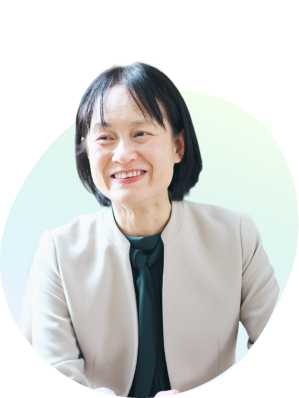
Graduated from Juntendo University and earned a Ph.D. in Medicine. After qualifying as a board-certified neurologist, she has conducted research on the pathophysiology of neuromuscular diseases at the National Center of Neurology and Psychiatry since 1990, engaging in studies on cellular and gene therapies. She also completed research training at the U.S. National Institutes of Health (NIH).
She is currently engaged in basic research at the Research Institute for Diseases of Old Age at Juntendo University, focusing on the molecular mechanisms of muscle contraction related to the extracellular matrix, as well as neurogenesis and aging.
研究所 副所長

Graduated from Hamamatsu University School of Medicine in 1990 and completed graduate studies at Keio University in 1994.
She then served as a research fellow at Heidelberg University in Germany and as a pediatrician at Yokohama Rosai Hospital, among other positions. In 2003, she joined the National Center for Child Health and Development as a researcher, became a division director in 2007, and was appointed Director of the Department of Molecular Endocrinology in 2011.
In June 2021, she assumed her current role as Deputy Director of the Research Institute.
Dr. Fukami
Dr. Hirasawa, Juntendo University has been promoting diversity for many years. Could you tell us what prompted you to begin these initiatives?
Dr. Hirasawa
We began promoting diversity at Juntendo University in fiscal year 2011.
At the time, very few women were able to balance work and life after obtaining their degrees and board certifications, and most female physicians left the university after completing graduate school.
To change this situation, we first created a foundation to prevent women researchers and physicians from leaving their positions. Many women experience childbirth during graduate school, so intending to provide “support that truly reaches those in need,” we made support for life events our top priority.
Dr. Fukami
At NCCHD, about 70% of our researchers are women, yet relatively few hold senior positions such as department heads. We want to increase the number of women who can build long-term careers with leadership roles in mind.
What specific forms of support did you begin with?