
My Philosophy
 Cross
CrossTalk
Integrated Center for Women’s Health Director
Women’s Health Center Women’s Surgery / Gynecology
Integrated Center for Women’s Health
Discovery and Innovation Gateway (provisional name) Division Chief
Research Institute, National Center for Child Health and Development Division of Diversity Research Chief
Cross Talk .02 | Part 1 Where Voices Rise, Diversity Thrives
Working women build their careers while navigating challenges at every stage of life — from pregnancy and childbirth to child rearing — as well as issues unique to women, such as hormonal changes. These are not individual concerns alone, but important dimensions of diversity that deserve thoughtful attention.
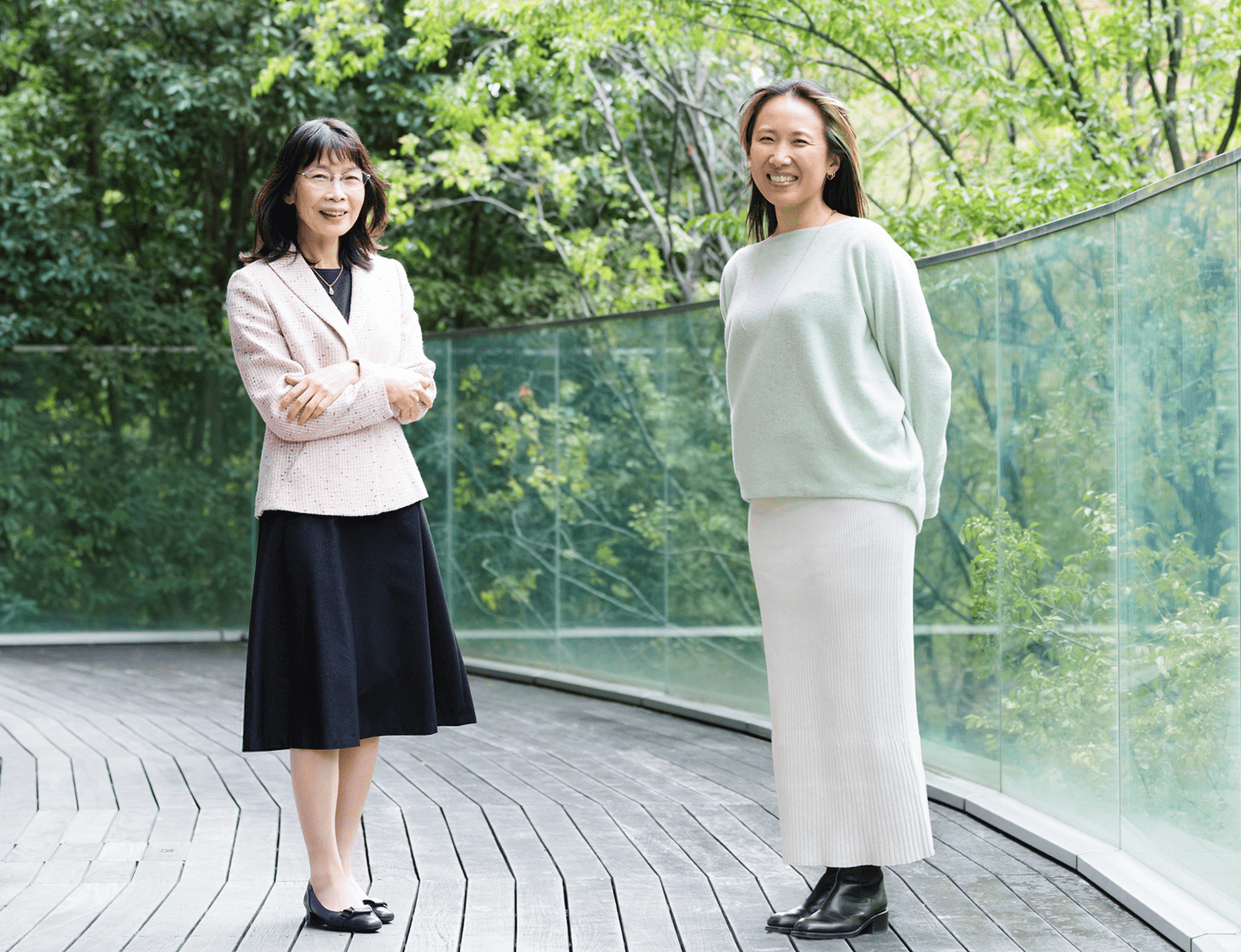
In this conversation, we spoke with Dr. Hiromi Komiya, who has long been engaged in women’s health and career support, and Dr. Keiko Matsubara, who leads diversity initiatives at NCCHD, about practical insights for sustaining careers and the perspectives organizations will need in the years ahead.
Integrated Center for Women’s Health Director
Women’s Health Center Women’s Surgery / Gynecology
Integrated Center for Women’s Health
Discovery and Innovation Gateway (provisional name) Division Chief
Research Institute, National Center for Child Health and Development Division of Diversity Research Chief
Working women build their careers while navigating challenges at every stage of life — from pregnancy and childbirth to child rearing — as well as issues unique to women, such as hormonal changes. These are not individual concerns alone, but important dimensions of diversity that deserve thoughtful attention.
In this conversation, we spoke with Dr. Hiromi Komiya, who has long been engaged in women’s health and career support, and Dr. Keiko Matsubara, who leads diversity initiatives at NCCHD, about practical insights for sustaining careers and the perspectives organizations will need in the years ahead.
When Pregnancy and Childbirth Interrupted a Career, a Journey Toward Supporting Others

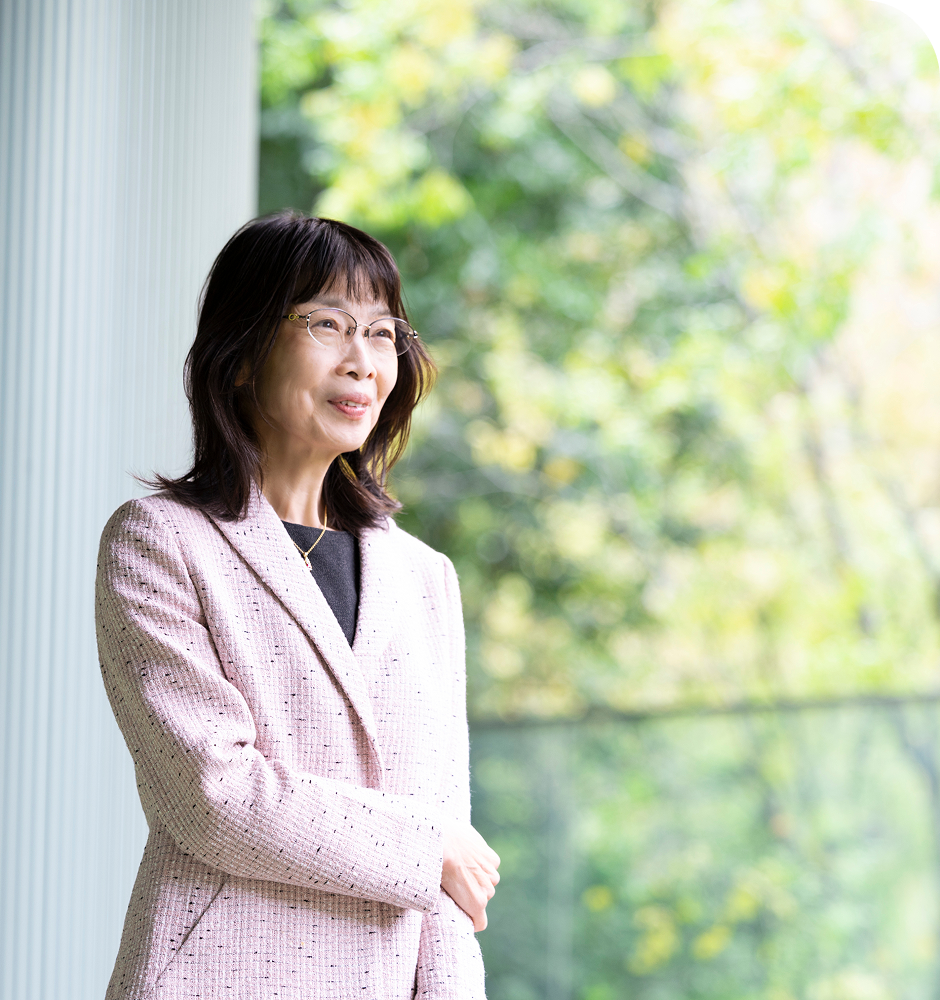
Dr. Komiya
Yes, that is true. While continuing my clinical work in obstetrics and gynecology, I met a mentor who encouraged me to return to research. That encounter opened a path I had once thought was closed. At the mentor’s suggestion, I made the decision to study in the United States, bringing along my child, who was then in the fourth grade.
During my time in the U.S., I came to realize that nothing begins unless you take the initiative, and that unless you put your thoughts into words, they will not be understood. Living and working in that environment taught me to act decisively and work efficiently, and in doing so, I gradually regained my confidence. Looking back, I see that period as a major turning point in my life. Without that experience, I would not be who I am today.
Dr. Matsubara
Today, it is rare to see careers curtailed simply because of marriage or childbirth. In fact, remarks suggesting such limitations would now likely be recognized as harassment. In light of these changes, do you feel that the way women work — and are able to build their careers — has evolved compared to the past?
Dr. Komiya
Compared to the time when I was told those harsh words in graduate school, the situation has changed significantly. That said, I would not say that everything is resolved; there are still challenges that remain.
One of the clearest signs of progress is that remarks like those I once heard are no longer part of everyday conversation. In that sense, I do feel that society has moved forward.
Dr. Matsubara
In what areas do you feel that progress is still insufficient? For example, are there forms of support that, had they been available at the time, might have made things easier or allowed you to navigate that period more smoothly?
Dr. Komiya
After returning from the United States, I joined Fukushima Medical University. At that time, one conviction grew very strong within me: I did not want younger physicians to go through the same experiences I had faced.
The first step was to improve the environment. We began with initiatives to support women physicians, which gradually expanded to broader efforts in gender equality and diversity. I was involved in establishing childcare facilities for sick and recovering children and in introducing research support programs. Step by step, we worked to create conditions that would make it easier to sustain both professional and personal responsibilities.
Looking back, I sometimes think that if such systems and support structures had existed earlier, I might have been able to work with less strain. That realization reinforced my belief that building the right environment is fundamental.
Support Only Matters When It Can Be Reached.
The Strength to Keep Working Begins with Saying “I Need Help.”
Dr. Matsubara
In my work related to diversity, I often receive consultations, particularly from women in their forties who are raising children. For those who have just married or recently given birth, various systems — such as maternity leave, parental leave, and related support measures — tend to provide a certain level of assistance.
However, when children reach their early teenage years, many women find themselves struggling again. Even though their children are older, they still require considerable attention, and yet formal support systems are far more limited. I frequently hear concerns such as, “I can’t seem to manage my work well at this stage.”
How, then, can women navigate and move through this period?
Dr. Komiya
For example, I would encourage women to make full use of the support systems and resources available to them. Simply having support in place is not enough; it only becomes meaningful when it is actively and thoughtfully used.
The same applies to parenting. What matters is not just the existence of systems or assistance, but how well they are adapted to one’s own circumstances and put into practice.
Dr. Matsubara
So, rather than simply waiting for support to come, what truly matters is having the courage to speak up and say, “I need help,” is that right?
Dr. Komiya
Yes, exactly. Being able to say, “I need help,” and taking the initiative to seek out the support you need — both are essential.
Even when systems and environments are initially well established, over the course of a long life, attention from others can fade, and support may become less visible or harder to access. Yet if no one speaks up, those around us cannot recognize what is happening or know where to direct their attention.
When others understand, “She may be struggling,” or “She would like to contribute more, but the environment is not yet in place,” someone might step forward and say, “There is support available for this.” That is why I hope people will not carry their difficulties alone, but instead find ways to express them. Putting into words — saying, “I am struggling” — is, I believe, an important first step.

Holding On to What Matters
Not Quitting. Not Walking Away.
Keeping Your Career Alive.
Dr. Matsubara
At the same time, it can be difficult to put those feelings into words. Even when systems and support exist to help people move in the direction they wish to pursue, they are not always fully utilized.
How, then, can we cultivate the mindset that allows someone to raise their voice and ask for help?
Dr. Komiya
I believe it ultimately comes down to having a sense of purpose — and a certain determination. Throughout my journey, I have always carried with me a desire to work in women’s health and to support women physicians in sustaining their careers. There were many twists and turns along the way, but looking back, everything I did was connected by that single thread.
What matters most, I think, is the idea of not interrupting one’s career — in other words, continuing. Sustaining that continuity is fundamental.
To do so, the environment must first allow people to keep working. Systems and support structures have gradually improved, but it is equally important to make thoughtful use of them.
At the same time, one must hold on to the desire to continue one’s career. It is only when these two elements — a supportive environment and a sustained personal commitment — come together that women can truly feel secure in building their careers.
That is why, if there is something you genuinely wish to pursue, it is important to keep asking yourself how you might move toward it. Of course, even with strong conviction, there will be challenges and moments when progress feels slow. But continuing to hold on to that purpose, I believe, makes all the difference.
Dr. Matsubara
There are times when you feel close to losing heart, aren’t there?
Dr. Komiya
Yes, there are. But I believe that if you continue to hold on to your purpose and keep moving forward without stopping, you gradually find yourself drawing closer to the life and work you once envisioned.
In my own case, being entrusted with a role that allows me to work in women’s health and career support almost feels more than I could have hoped for. And yet, what matters most to me is not the position itself, but the sense that I am finally able to realize what I truly wanted to do.
It was only in the later stages of my career that I began to feel a stronger sense of clarity about my professional identity. Of course, there were many things I could not accomplish as fully as I wished, and there were times when I felt behind others. Still, I believe that by continuing with conviction and passion, the path gradually began to open.
How about you, Dr. Matsubara?
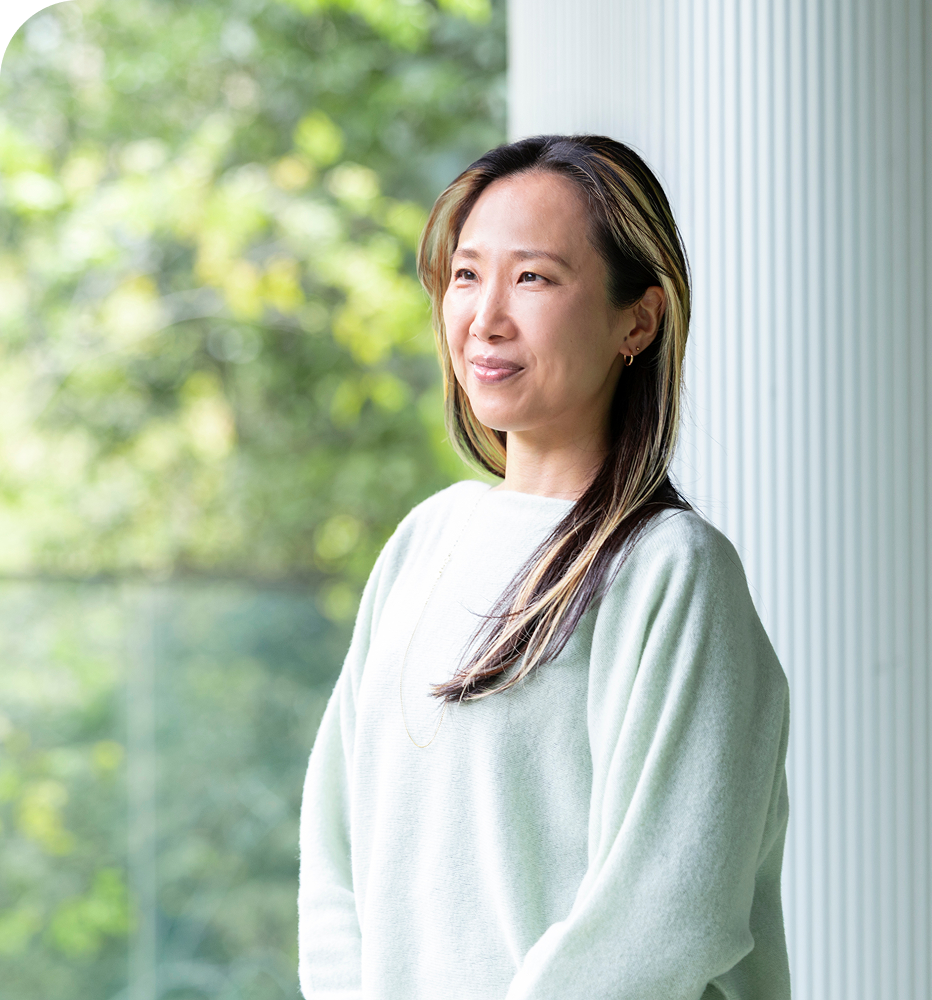
Dr. Matsubara
For me, it always begins with the patient. The turning point that led me toward research came when a mother who had just given birth to a child with Down syndrome asked me, “Was it my fault?”
It is well known that the risk of chromosomal conditions gradually increases as maternal age rises. Yet I found myself questioning whether simply conveying that scientific fact was truly enough to respond to the feelings of the mother standing before me. As a second-year resident at the time, I realized that I did not have an answer to that question.
That experience made me want to understand, from a scientific perspective, what it truly means for a woman to conceive, give birth, and raise a child. And so I chose to pursue research.
There were many setbacks along the way. Even now, I remember that mother’s expression, and I recall my own frustration at not being able to ease her anxiety more fully. In many ways, those memories continue to sustain me and guide the work I do today.
Dr. Komiya
That is a deeply moving story.
Dr. Matsubara
In many ways, my path has been different from Dr. Komiya’s. At a certain point in my career, I felt unable to make the decision to have children. I was afraid that my career might come to a halt. As a result, I have come to where I am today without having children, and I expect that I will continue along this path.
Precisely because of that choice, I hold deep respect for those who decide to have children and continue working while raising them. I truly wish to support all of them — to see them remain healthy and find fulfillment in both their personal and professional lives.
When times are difficult, I return to my starting point. I think of that mother who asked, “Was it my fault?” And I reflect on what I, as someone who did not make the decision to have children, can contribute. Those two thoughts continue to move me forward.
Dr. Komiya
Yes, I believe that holding on to one’s sense of purpose — not quitting, not walking away — is essential. Of course, taking time off for a period is not a problem at all. Stepping away from work temporarily, for example through parental leave, is entirely natural.
What matters most is coming back afterward. Rather than carrying everything alone, it is important to make use of whatever support is available — whether institutional systems or the people around you — and to build one’s career while being supported and supporting others in return.
In the end, I feel that sustaining a career is less about doing everything on one’s own, and more about remaining connected and continuing forward together.

Integrated Center for Women’s Health Director
Women’s Health Center Women’s Surgery / Gynecology

Graduated from Yamagata University Faculty of Medicine and earned a Ph.D. in Medicine. After completing clinical training in obstetrics and gynecology, she conducted research at Baylor College of Medicine in the United States.
In 2001, she joined Fukushima Medical University, where she dedicated herself to women’s healthcare and the support of women physicians. She has held key leadership positions, including Professor at the Center for Gender-Based Medicine and Vice Director of the Office for Gender Equality Promotion, working to advance institutional reforms and create supportive environments.
In October 2024, she was appointed Director of the newly established the Integrated Center for Women’s Health (ICWH) at the NCCHD.

Integrated Center for Women’s Health
Discovery and Innovation Gateway (provisional name) Division Chief
Research Institute, National Center for Child Health and Development Division of Diversity Research Chief

Graduated from Hamamatsu University School of Medicine. A pediatrician and Ph.D. in Medicine. She has conducted research on pediatric endocrinology, imprinting disorders, and clinical genetics. Building on expertise in molecular endocrinology and data science, her work focuses on the analysis of hereditary diseases as well as research in pediatric developmental medicine and therapeutic support.
After serving as Researcher and Senior Researcher in the Department of Molecular Endocrinology at NCCHD, she was appointed Chief of the Division of Diversity Research in 2023.
Dr. Matsubara
I understand that during your university years, you faced the challenge of balancing childcare and your professional responsibilities. Could you share more about the specific difficulties you experienced at that time?
Dr. Komiya
Looking back on my years as a medical student, I remember devoting much of my time to tennis and fully enjoying student life. At that stage, I had not thought deeply about my long-term life plans or career path. With a strong interest in women’s health and research, continuing to graduate school felt like a natural progression.
Around that same time, however, I got married and became pregnant. After giving birth, when I spoke with my supervisors about returning, I was told that, given my circumstances, it would be difficult. Hearing this was deeply unsettling. For the first time, I found myself wondering whether pregnancy and childbirth might unexpectedly bring my academic career to an end.
I ultimately left graduate school and joined the department of obstetrics and gynecology, continuing my clinical training. Even so, for several years I often felt caught in between, unable to give my full energy to either work or family. At the time, there were very few women physicians and almost no role models to look to. Still, leaving was never an option for me. I made the decision to continue — and held firmly to it.
Dr. Matsubara
It is hard to imagine such circumstances today.