
My Philosophy
 Pick Up
Interview .04 |
20 Years Since Encountering Rare Disease Research:
A Career Built at My Own Pace
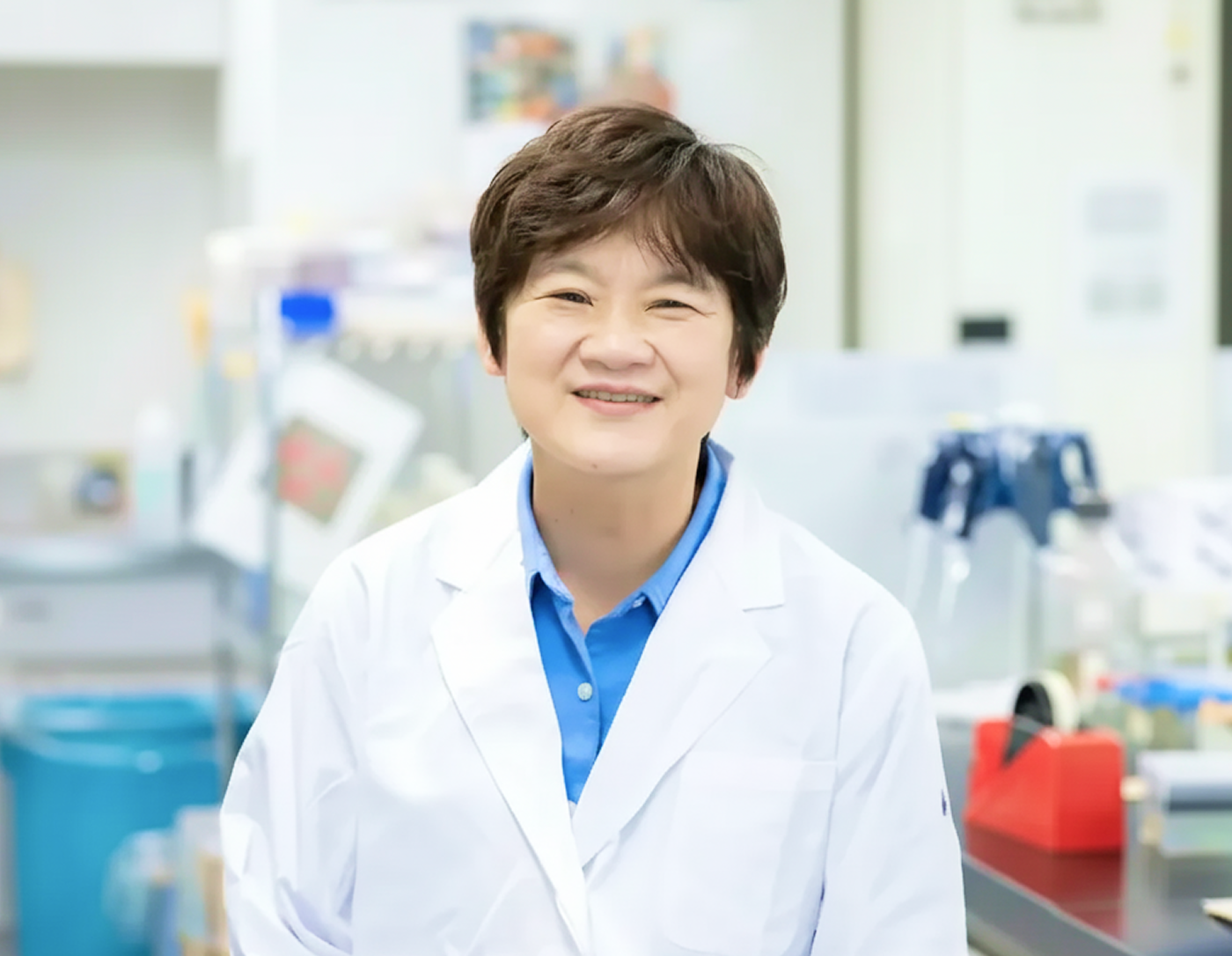
Dr. Masayo Kagami specializes in research on rare imprinting disorders. She serves as Chief of the Department of Molecular Endocrinology and is known for her discovery of Kagami–Ogata syndrome, a rare imprinting disorder. Dr. Kagami has built a career spanning more than 20 years while balancing childcare and research. We spoke with her about her path in research and her message to young researchers.

Chief of Department of Molecular Endocrinology
Building a Team That Leverages Individual Strengths
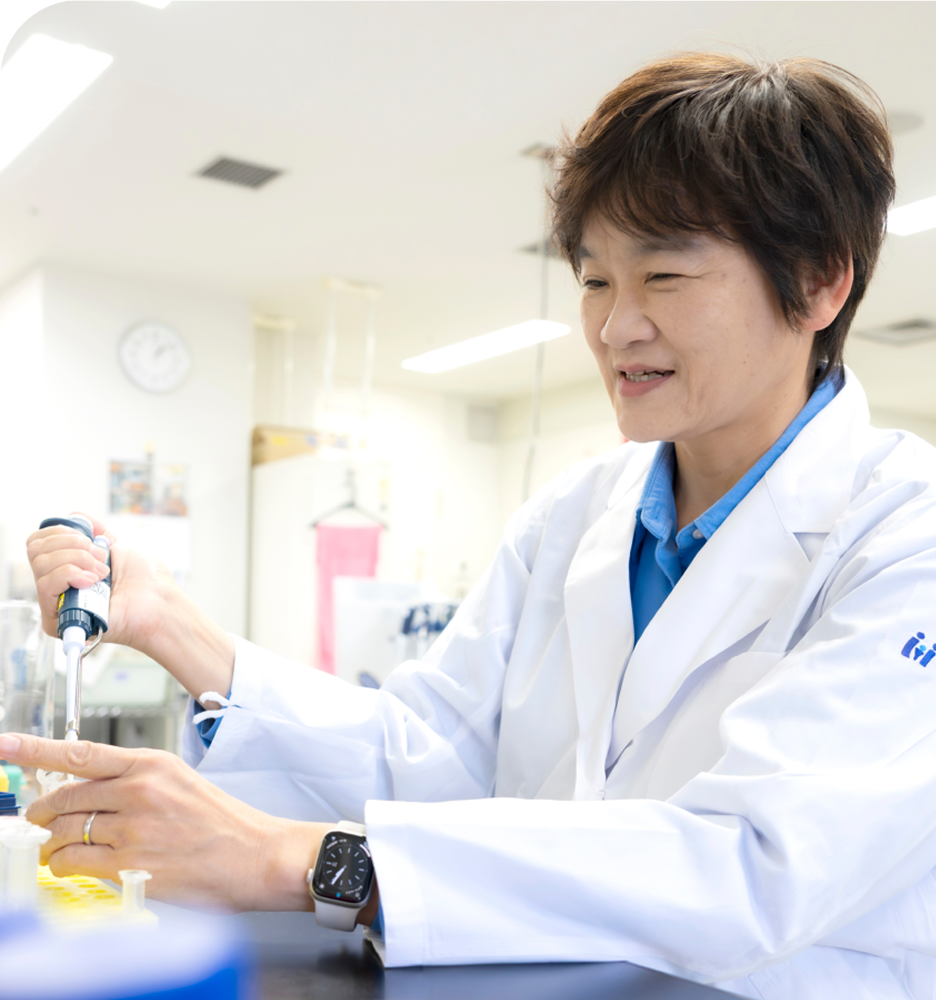
All graduate students in my team are pediatricians who plan to return to clinical practice while continuing their research in the future. They are all highly capable and dedicated, but each has a different personality and working style. Therefore, I set clear research goals while allowing each individual to choose the approach that best suits them.
In managing my team, I try to assign roles so that each member can work within their capacity while making the most of their strengths, with the goal of achieving results as a team. For example, when experiments must be completed within a limited time, such as before a manuscript resubmission deadline, I encourage a culture in which members support one another. I also aim to provide clear and timely guidance so that everyone can work with confidence and focus on their research.
Flexible Priorities for Balancing Research and Family
I feel very fortunate to be in an environment that allows me to focus on research. For clinicians who balance both clinical responsibilities and research, patient care must always come first, and securing time for research can be quite challenging. Compared with that, my role as a researcher offers a certain degree of flexibility in managing my schedule, which has been very helpful.
For young researchers, I would emphasize the importance of setting priorities flexibly according to each stage of life. There will be times when family comes first and times when work takes priority. Rather than setting rigid rules, it is important to recognize when it is acceptable to ease off and when extra effort is required. I believe that this flexible approach is key to sustaining a long research career.
Chief of Department of Molecular Endocrinology
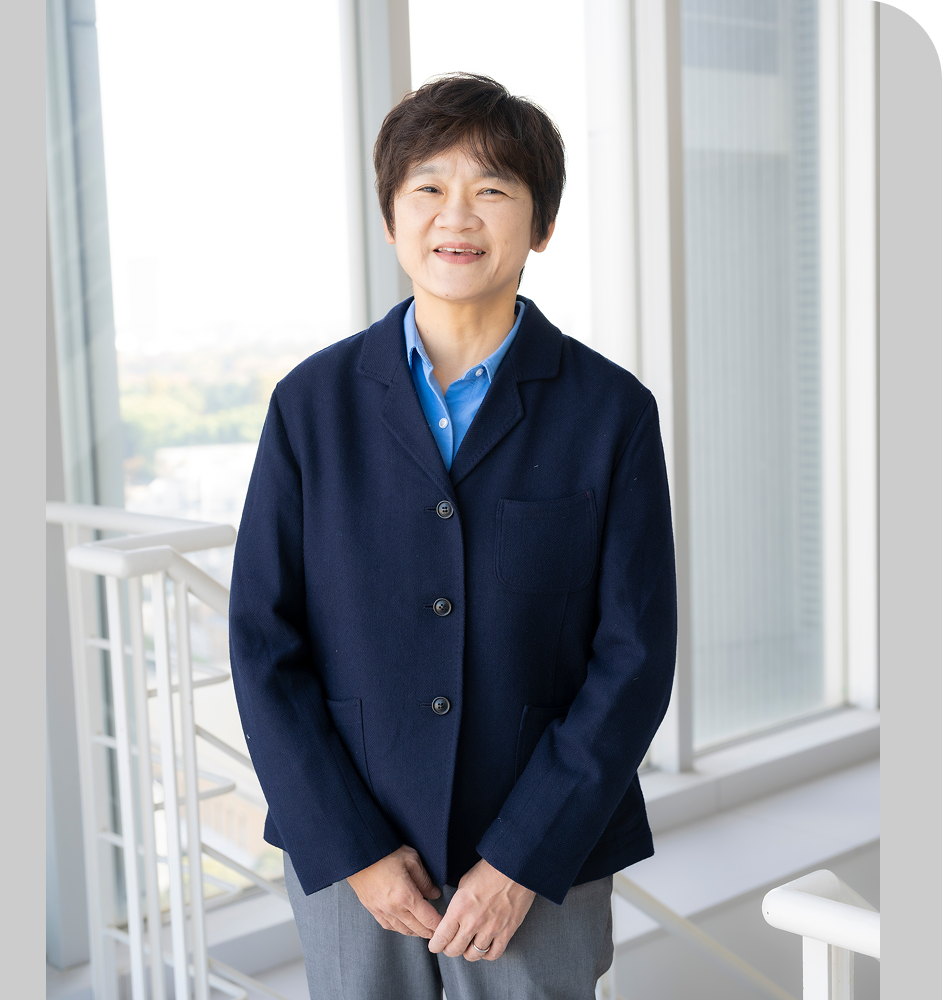
Graduated from Asahikawa Medical University. Completed her pediatric residency at Hokkaido University and became a board-certified pediatrician. She obtained her Ph.D. in Medicine from the same university. She then joined the National Center for Child Health and Development, where she has conducted research in molecular endocrinology, serving as Researcher and Senior Researcher. Since 2012, she has been Chief of the Department of Molecular Endocrinology. Her work focuses on imprinting disorders and epigenetics. She has contributed to the clinical characterization of paternal uniparental disomy of chromosome 14 and to the international recognition and establishment of the name “Kagami–Ogata syndrome.”
A Chance Encounter That Shaped My Research Career
I was working as a pediatrician in Hokkaido, but moved to Tokyo after getting married. At that time, I was in graduate school and conducted research at the National Children’s Hospital (the predecessor of the National Center for Child Health and Development) as part of my doctoral training. After giving birth, I was considering my next research direction when my former department head, Dr. Tsutomu Ogata, encouraged me to explore imprinting disorders. Since then, I have continued my research in this field for more than 20 years.
By chance, one of the patients admitted to the National Center for Child Health and Development presented with a condition that appeared to result from a previously unknown mechanism. Identifying its cause significantly advanced the research, and we were able to publish our findings in a leading academic journal. This work later contributed to the disorder being named Kagami–Ogata syndrome, which ultimately defined the direction of my research career.
A Supportive, Child-Friendly Environment Sustained Me
Although my hometown is in Hokkaido and I did not have many family members nearby to rely on, the atmosphere in the laboratory was very warm and understanding. This supportive environment enabled me to balance research and childcare. When my child had a fever and I needed to take time off, colleagues would say things like, “You should go home early,” or “Your child comes first.” At the same time, I was not treated differently or overly protected, which allowed me to continue working at my own pace. I was truly grateful for this environment.
The support of research assistants was also invaluable. During critical phases of my research, they provided substantial help with experiments and created an environment that allowed me to continue my work while managing my time flexibly.